
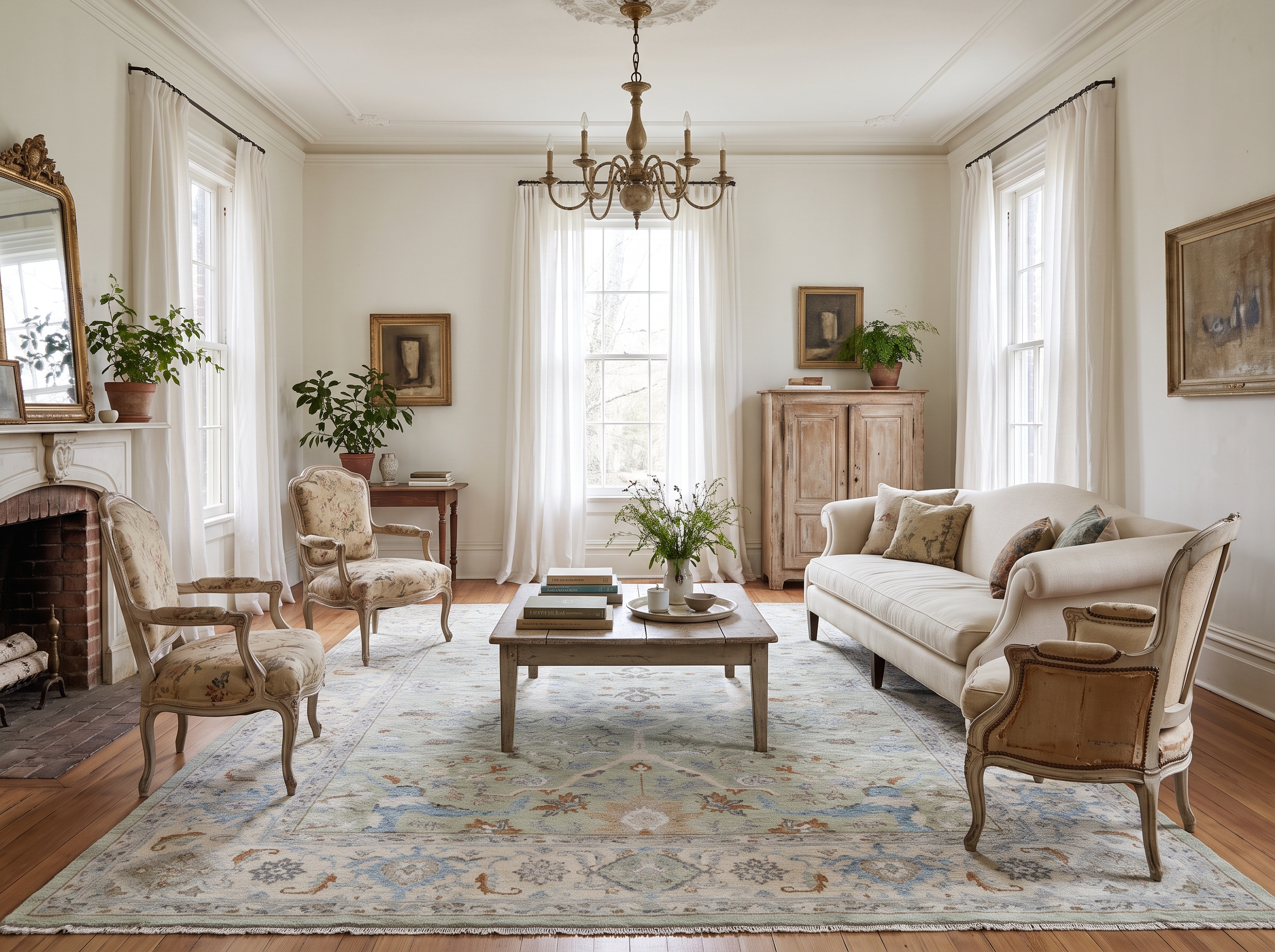
There’s a reason antique rugs still command a room. Hand-knotted from wool colored with plant dyes and built knot by knot over months, they carry a depth that mass-market pieces rarely manage. While it may
There’s a reason antique rugs still command a room. Hand-knotted from wool colored with plant dyes and built knot by knot over months, they carry a depth that mass-market pieces rarely manage. While it may seem that to own a beautiful soulful oriental rug, you would need to inherit it or hunt one down at auction, this is not true. Look closely at what’s being made today and the golden era starts to feel less like history and more like a revival in progress.
The techniques never really left. Weavers still tie the same Turkish and Persian knots, still dye wool in small batches, and still let the subtle color shifts between those batches — known as abrash — ripple across the field. Those irregularities were once simply the mark of a handmade piece. Now they’re exactly what designers go looking for.
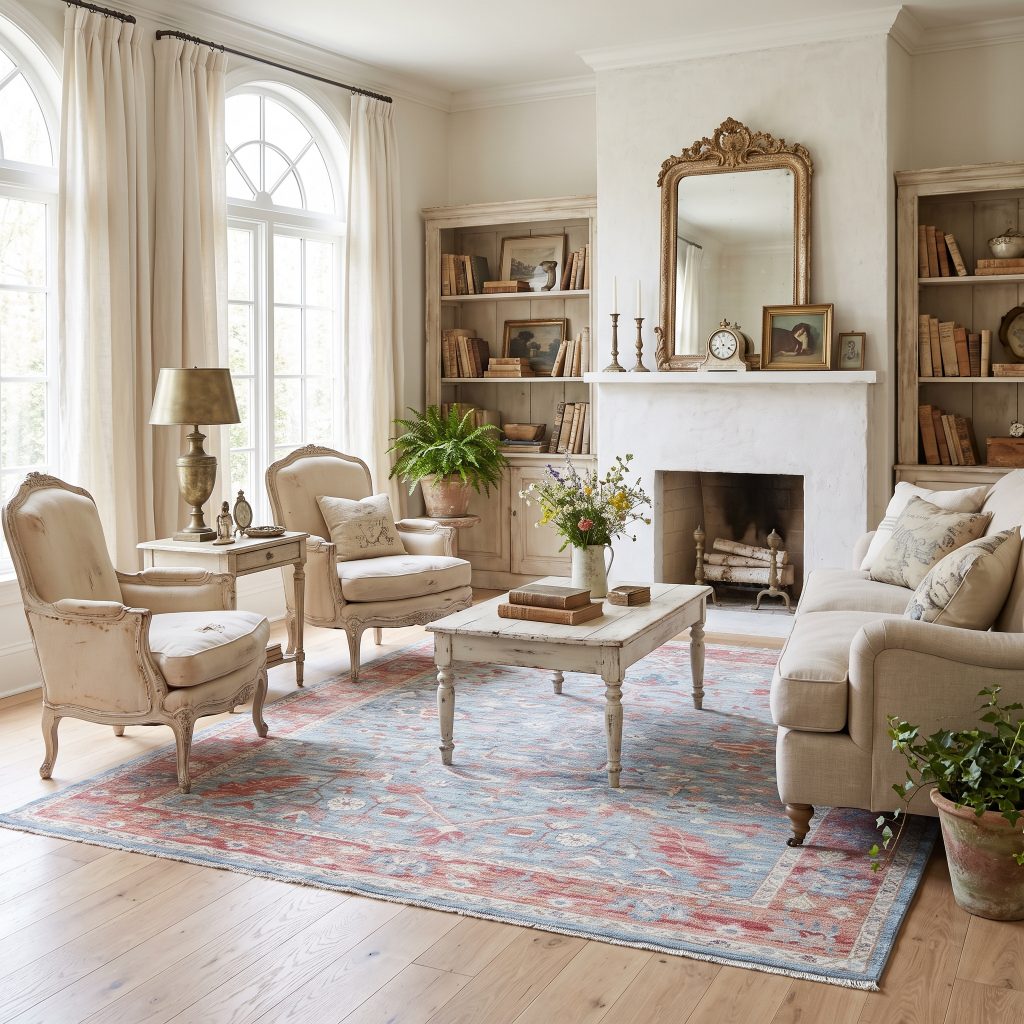
Our Antiqued Persian Heriz (sh10546) is a good example: rich, nuanced color with distinct abrash, drawing on the Northwest Persian rugs that inspired it. Our Afghan Angora Oushak (SH21562) takes another classic route, with an all-over leaf design hand-knotted in wool and colored with vegetable dyes — the same approach weavers relied on long before synthetic dyes arrived. And our Pistachio Green Oushak (sh10599) proves a traditional floral can feel entirely current: the motif is classic, the hand-knotted pure wool is classic, but the soft green palette belongs to now.
Then there’s our Anatolian Village design (sh2806), knotted with the traditional Turkish knot around stepped octagonal medallions, then sheared low for a gently worn, vintage finish. It’s a new rug that wears its heritage openly.
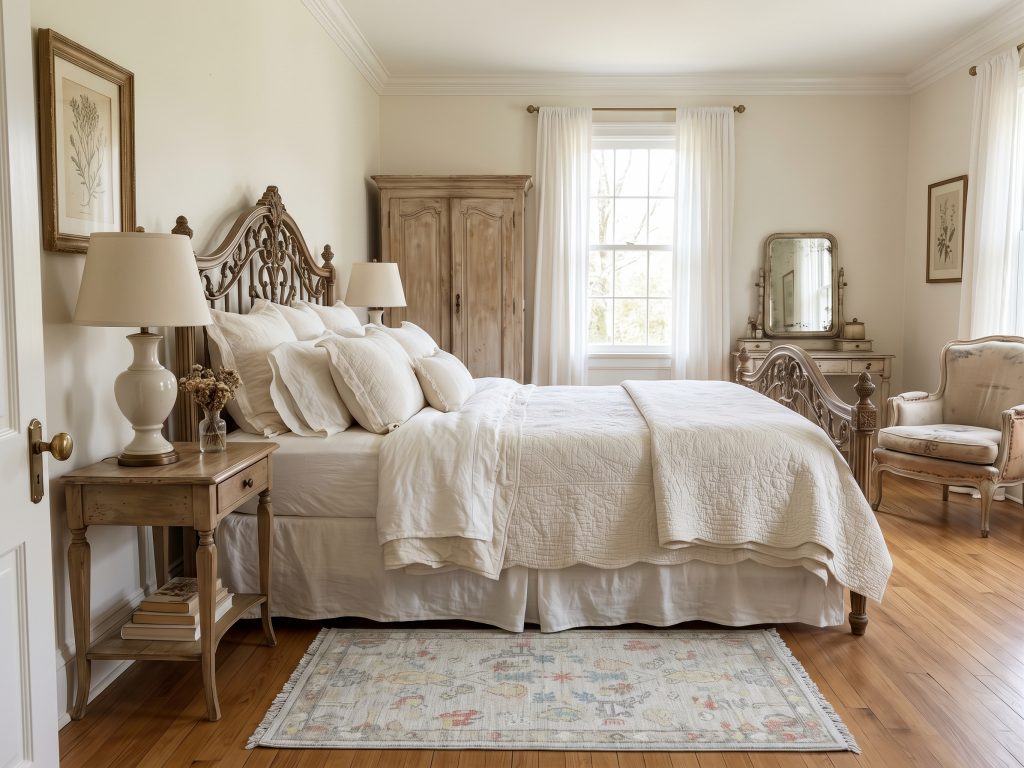
This isn’t happening in isolation. Across interiors, classic design movements keep resurfacing. Art Deco’s geometry and gilt have returned to living rooms and hotel lobbies. William Morris-style botanicals and Arts and Crafts patterns appear on wallpaper, upholstery, and rugs alike. Even Bauhaus, the movement that once stripped ornament away, has become a reference point — our Bauhaus-Inspired geometric rug (sh22264), hand-knotted in pure wool, borrows its bold shapes from that era and from the Arts and Crafts movement.
What makes this moment different is how eclectic those references have become. A single room might pair an Art Deco mirror with a Victorian side table, a mid-century chair, and a Persian village rug underfoot — and rather than clashing, the mix reads as personal and collected over time. Classic patterns are no longer confined to strictly traditional rooms; they’re layered freely alongside one another.
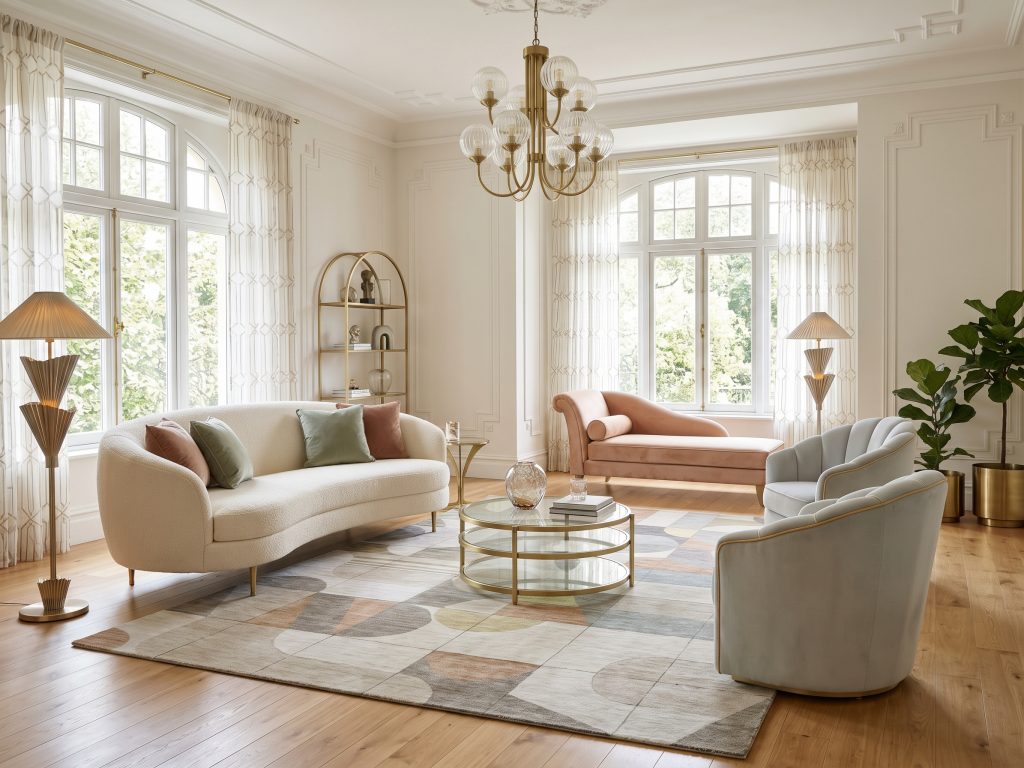
Not that the revival has it easy. Lovers of classic design are pushing back against a strong current: minimalism and pared-back, all-beige interiors remain hugely popular, favoring calm over character. In that context, a richly patterned hand-knotted rug becomes a quiet act of resistance — proof that a room can feel serene and still tell a story.
S&H founder Ori Wilbush has pointed to rising demand for pieces with ‘historic character’ that still sit comfortably in modern, transitional spaces. That’s the balance worth chasing: old methods, old patterns, fresh context.
So, will the golden era return? In a sense, it never fully left. It simply needed makers willing to keep the knots, the dyes, and the patience alive.